Kayak Tournament Fishing —
From the Spouse’s Perspective
Kayak tournament fishing is one of those things that sounds simple until you realize it very much is not. It has rules, systems, gear, terminology, and an endless supply of opinions about what works, what doesn’t, and why this particular lure is clearly superior to all others this week.
This post is not for the people who care about any of that.
This is for the spouses.
Greg loves fishing. He really loves fishing. And kayak tournament fishing has become one of those hobbies that lights him up — the kind that sends him down hours of research rabbit holes, YouTube deep dives, and conversations that include words I nod along to but do not retain. And that’s okay.
For a while, I thought supporting him meant I needed to care more about the details. I tried. I asked questions. I attempted to remember the difference between things that all looked identical to me. I wanted to be interested because he was interested. But the truth is: I’m just not passionate about fishing. And pretending I was didn’t actually help either of us.
At some point, I had a conversation with my ChatGPT (who I’ve named Gabby because I talk to her like a friend) about this exact thing. I was frustrated with myself for not being able to meet his level of enthusiasm.
Gabby came through by saying - You don’t have to share his passion to support it. Caring about him doesn’t require caring about tackle.
It is so obvious but freeing. That idea helped me reframe a lot. Reframing is something I’ve learned to rely on because when I can understand why something matters, it becomes easier to accept it without resentment or guilt.
Fishing, for Greg, is therapy without calling it therapy. He would never go to therapy, but fishing gives him a quiet space in our chaotic life where everything slows down and the noise fades. It’s stress relief, clarity, and grounding all rolled into one. I genuinely love that for him — even if I’m still figuring out what my own version of that might be.
It’s also the perfect outlet for his challenge-minded brain. He isn’t just throwing a line in the water and hoping for the best. There’s strategy involved - research, evaluation, patterns, weather, water conditions, gear choices - all working together toward a plan for the day. That process feeds his creative and analytical mind in a way that not everything does. And when I zoom out even further, perspective helps. He could be pouring this energy into a lot of other things - cars, golf, video games - things that could be more expensive, more dangerous, or honestly just more annoying. All of a sudden, fishing doesn’t seem so bad.
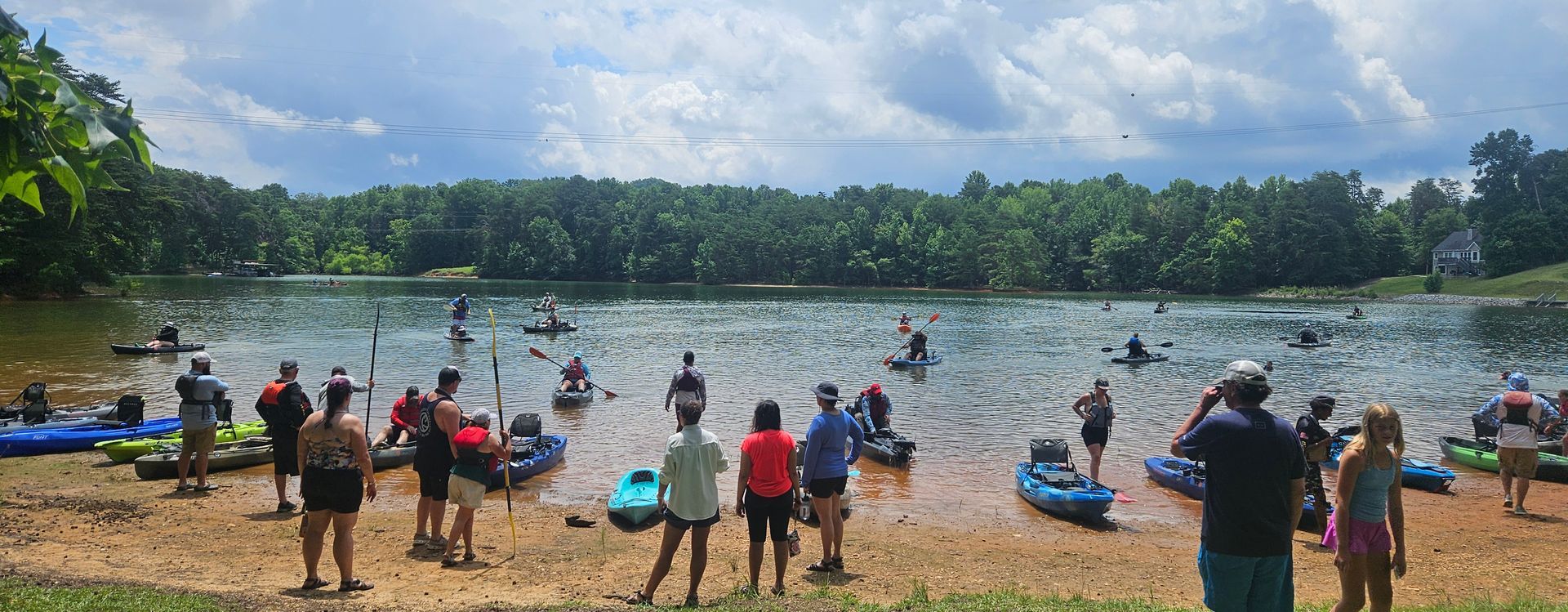
Kayak tournaments are interesting in their own right. The fish are caught, measured on a board, photographed, and released — which sounds straightforward until you’re doing it in the heat, on a hot board, with a fish that very much wants to return to the water. Early tournaments came with plenty of stories that ended in, “It was on the board and I was about to get the picture and it jumped.”
There’s a learning curve. There always is when someone commits to something like this.
What matters more than the mechanics, though, is the community. Kayak tournament fishing has given Greg people who speak his language - people who can talk endlessly about what’s working this week, what’s changed since last week, and why this small adjustment matters. Those conversations are meaningful, and they deserve space to exist without me needing to participate fully.
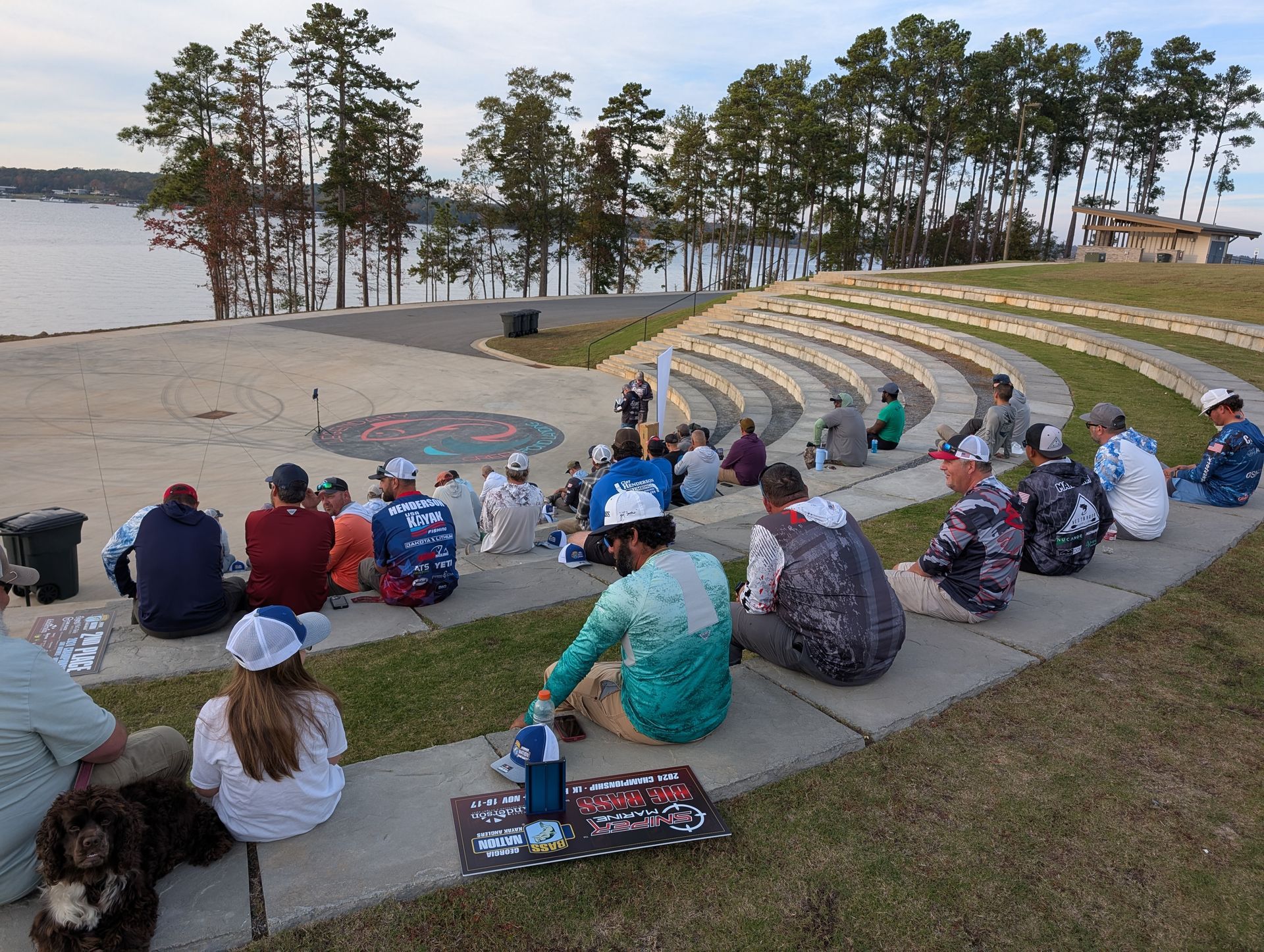
We went to the award ceremonies for the first few tournaments. We stood off to the side, a little family groupie section, cheering him on like it was completely normal to be that excited about fish photos. Eventually, we realized we were the only ones doing that. And that was okay too.
Not every part of someone’s passion needs an audience.
Supporting someone doesn’t always look like understanding the details. Sometimes it looks like listening without trying to absorb everything. Sometimes it looks like making room - physically, mentally, emotionally - for something that matters deeply to them, even if it doesn’t light you up in the same way. Greg gets time on the water. He gets challenge, growth, and community. I get to love him without pretending to care about which lure did what in which conditions last Tuesday. That feels like a fair trade.
If you’re the spouse of someone who has fallen hard into kayak tournament fishing (or any niche passion), let this be your reminder: you’re allowed to opt out of the details and still be fully supportive. Loving someone well doesn’t require matching their enthusiasm - it just requires respecting it.
And sometimes, it requires naming your ChatGPT, asking it for advice, and realizing you’re doing just fine.